Sunday, September 29, 2013

PARIS SEES HIGH DRAMA, EXCEPT AT MANSOUR SHOWROOM

Dresses by Beirut-based designer Sandra Mansour (Photo: J.M. De Clercq)

Even before Paris Fashion Week began, there were the sounds of warfare. Former top models Naomi Campbell and Iman fired off the first salvo, criticizing selected companies for not using enough black models.

A Mansour guipure and lace short dress 
Then last Thursday, on the third day of the event, two topless activists from the radical feminist group FEMEN invaded the runway at designer Nina Ricci’s show, apparently protesting against the exploitation of women’s bodies. According to some reports, one of the activists got more than she expected when a model punched her before the security guards moved in.

That same day American designer Rick Owens caused a commotion when he used normal-sized “stepping” dancers from U.S. sororities to present his 2014 spring/summer collection.  The models stomped down a two-sided staircase and onto the catwalk, their faces deliberately angry and defiant, while the backing music throbbed to their faux-war dance.

Things were oh so much quieter at the showrooms! During the week, designers from around the world who aren’t mounting catwalk spectacles rent showrooms to present their products to buyers and the press, and the atmosphere is a far cry from the frenzy of the “defilés”.  One of these designers is Sandra Mansour, a talented Swiss-Lebanese designer whose “more is less” motto sums up the elegant simplicity of her creations.

The clothes are designed and created in Lebanon, by a team of 15 people, and the process starts with Mansour sketching rough drafts of prints and patterns with pens, colouring pencils, and watercolour paints. The drawings are then transferred to the computer where they are further worked upon before Mansour’s team of seamstresses and tailors make the ideas come to life.

Sandra Mansour in Paris (Photo: J.M. De Clercq)
All of the designs on the fabric are original, Mansour said in an interview, in contrast to the practice by some designers of buying ready-printed material. For Mansour, this is essential as it adds a strong artistic element to her collections.

In fact, her first love was art, she said. But her parents did not see this as a viable career, and so she studied business. The couture came after she did an internship in Beirut with Lebanese designer Elie Saab.

“It was like a dream,” Mansour said. “In the morning, I was with the commercial team, and in the afternoon, I worked with the haute-couture department. I learned so much.”

After the internship, she studied fashion design at the Paris branch of the prestigious Instituto Marangoni for one year and then started her own line of clothing, combining her business background and her love of art.

A Mansour maxi dress with belt
Mansour plays with the contrast of simple cuts and elaborate materials and colours, and she says she works to highlight the beauty of a woman’s body, enhancing the form. On a blue strapless maxi dress, for instance, she will place a gold belt to draw attention to the waist.

One quickly notices the luxurious fabrics used, including gazar, guipure lace, crepe, tulle and silk. Then there is the embroidery which attests to the artisanship of her team.

“Everything is made by hand,” says product manager Tracy Moussi. This also goes for the wedding dresses and gowns, which attract a large clientele in Lebanon and other countries in the region.

Mansour says she would like to do runway shows and perhaps one day enter the spotlight of Paris Fashion Week. But given her background, for her it’s more about the art than about the noise and spectacle. - J.M. De Clercq & L. McKenzie

Friday, September 13, 2013

THE CHALLENGE IS ON AT LONDON FASHION WEEK

As London Fashion Week began today, much of the buzz was about the “Emerging Trends Fashion Challenge 2013”, in which up and coming designers from around the world are competing for a $10,000 marketing package.

A design by contestant Hope Wade
The contest gives these designers a chance to showcase their talent to buyers, the fashion press and a range of sponsors. As part of the prize, the winner will have an “exclusive opportunity to showcase at a major Fashion Week show either in the USA, the United Kingdom or Dubai,” according to Synergy Events, the organizers.

The lucky designer will also be featured on “multiple global trade publications and introduced to multiple upscale boutiques in Europe”, Synergy added. The countries represented by the competitors include the United States, Jamaica, Norway, and the United Arab Emirates.

This is only the second Emerging Trends Challenge, after the inaugural contest last July in Paris, France, where five designers of women's apparel were judged on their creativity, practicality and ability to sustain the fast-moving fashion market. The winner of that Challenge was New York-trained designer Christine Manthey, who gains inspiration from her travels around the world. She and the event earned reams of attention in Paris.

Of course, competition - official or otherwise - is nothing new during Fashion Week, and top British designers such as Vivienne Westwood and Paul Smith will be vying for a share of a very different kind of pie as the Week is expected to attract more than $160 million in orders.

Buyers will be spoilt for choice, with nearly 60 catwalk shows for spring/summer 2014 being held from now until Sept. 17 in a city known for its quirkiness and individuality in design.

The must-see shows, according to most fans, are those by shoe designer Magnolo Blahnik, making his debut at LFW by hosting a short film starring - what else - his shoes; Brazilian-born Barbara Casasola (see earlier Tasshon article); and relative newcomer Thomas Tait. - J.M. De Clercq 

FOR A PARISIAN BARMAN, SCENTS ARE NOT ONLY FOR WEARING

Ever wondered what your favourite perfume would taste like as a cocktail? Well, now you can have the answer by sipping some inventive new drinks at the famed Plaza Athénée hotel in Paris, France. 

Coctail meets perfume.
The director of the hotel’s trendy bar has joined forces with the Thierry Mugler brand to create “Les Liqueurs de Parfums” – a meeting of high-end perfumes and luxury spirits that not only makes your breath smell nice, but also tastes quite good.

This week, a select group of writers were invited to discover the cocktails, all of which packed a powerful punch, even the fruity and feminine “Womanity”, named after the perfume created in 2010 and sold in a striking pink bottle.

The cocktail was, of course, a creamy rose colour. “I put the subtlety and softness of pink into the drink by using pulpy, sweet fruit such as raspberry, litchi, and strawberry,” said Thierry Hernandez, the director of the Plaza Athénée Bar. What produced the memorable taste though was a zest of ginger combined with Bombay Sapphire gin, chosen for its “pronounced aromatic effect”, Hernandez added.

For rum lovers or fans of Mugler’s “Alien” - the “woody and flowery” amber perfume launched in 2005 - the “Alien” cocktail has golden rum as a basis, with Grand Marnier, apricot juice and passion fruit to top things off.

“In order to capture the essence of the Alien perfume, my cocktail is built on a woody flavour; the drops of jasmine essence and orange blossom water recreate this floral, sunny dimension,” Hernandez waxed about the drink.

The Alien cocktail
While “Alien” both surprised and soothed the senses, the star of the evening was probably meant to be “Angel”, based on Mugler’s first perfume, born in 1992 with its streak of patchouli. 

According to fashion lore, the French designer drew on his memories of childhood and the smells of gourmand feasts to create Alien, but for the cocktail, the Cognac tradition has also provided inspiration.

“For the Angel Liqueur de Parfum, we were inspired by the traditional techniques of prestige Cognacs,” said Pierre Aulas, the Artistic Olfactory Director for the Mugler brand. The velvety green drink contains Cognac, in addition to Amaretto, fresh cream, white chocolate and vanilla.

This may all sound like more of a feminine choice, but male drinkers can have their own brew in the form of the honey-hued A*Men, drawn from Mugler’s 1996 masculine scent. The ingredients: Johnny Walker whisky, coffee liqueur, apple juice and maple syrup.

“The contrast between the masculinity and the softness of this perfume inspired me right away,” said bar director Hernandez. “For me the drink perfectly expresses the tones of the fragrance and has an ideal colour.” It’s now up to cocktail fans to decide if he’s right. - L. McKenzie

(The Plaza Athénée hotel is currently undergoing expansion and will reopen in June 2014.)

Thursday, August 29, 2013

COPENHAGEN OFFERS FEAST FOR BETTER WORLD

When Alex Atala has a knife in his hand, there’s no question about his profession. The famous Brazilian chef makes cutting up vegetables and preparing meals seem like the highest art. But his influence goes way beyond the kitchen, as Atala is one of the leaders in the “use-local-ingredients” movement.

Alex Atala (second from right) with other chefs.
He and his partners work with indigenous groups in Brazil to source ingredients for haute cuisine, including the meals served at his landmark São Paola restaurant D.O.M. This week he has been in Copenhagen, Denmark, talking about his work and taking part in Copenhagen Cooking – a 10-day festival that has attracted food-lovers and top chefs from all over the world.

One of the dishes at Copenhagen Cooking.
The event’s theme this year is “social food”, which means bringing people together over meals and raising awareness about the environment, according to the organizers. At the festival’s opening, Atala sliced cucumbers faster than the eye could follow, and told food aficionados about how he came to put ants on his menu.

Some years ago, he was visiting the indigenous Baré community in the Amazon when a woman called Dona Brasi offered him a dish. As he ate, he thought he tasted the herb lemongrass. “What did you put in it?” he asked.

“Ants,” Dona Brasi replied. Atala didn’t believe he’d heard right, and asked the question again. The answer was the same. Since then, Atala has been experimenting with insects in his cuisine and has created an institute called ATÁ that has close ties with local farmers and other producers. The ATÁ “manifesto” says that the “relation between man and food must be revised” to maintain biodiversity and protect people and the environment.

“Food can be much more than you can imagine. Food can change our lives, can change the lives of millions of people,” says Atala.

Chef Claus Meyer samples a dish.
In Copenhagen, this has been the mantra during the festival: in a world of constantly rising food prices, we must change our eating habits, reduce waste and think about the environment. The Danish capital is the home of the New Nordic Food Manifesto, which was formulated by Danish chef and businessman Claus Meyer and signed by his counterparts.

The manifesto does not lay out hard and fast rules, but provides a set of core “values” that include using the natural food resources of the Nordic region, such as berries, smoked fish and fruit and vegetables of the particular season.

When he drew up the proposal, Meyer said he found that “being a chef in the modern world meant taking responsibility, caring about the environment, working for biodiversity and being inclusive in your mindset.” That’s also the response he got from his peers in the gastronomy sector.

Since then, Copenhagen has developed a thriving restaurant culture, with about 15 Michelin stars. Noma, the renowned restaurant that Meyer co-founded, has been nominated the world's best restaurant on several occasions.

Both Meyer and Atala adhere to a biodynamic approach to cooking, and the Copenhagen Cooking festival has highlighted the international nature of this movement. Many countries are trying to change their agricultural models, and Denmark itself has plans to increase the share of organic food served in public institutions to 90 percent by 2015.

The organization tasked with making the goal a reality is the Kobenhavn Madhus (Copenhagen House of Food), located in the Danish capital’s old meatpacking district. The Madhus’ mandate is to “ensure that citizens who are part of a public food programme, from daycare to nursing homes, get a healthy and well-prepared meal of high culinary quality” each time they eat. The organization oversees some 900 public kitchens that serve about 60,000 meals each day.

The challenge has been to keep this increase “economically feasible” by not just substituting certain produce but developing a whole style of organic cuisine, according to Rasmus Kjeldahl, chairman of the board of the Madhus.

Rasmus Kjeldahl of KBH Madhus
“The higher we get, the hardest it gets,” Kjeldahl says. “Once you start moving beyond 60 percent of organic ingredients, you need to change the philosophy about how you work in the kitchen and about what kind of raw materials you use. It becomes about gastronomy, seasonality and about skills.”

The Madhus is participating in Copenhagen Cooking with a competition for schoolchildren and a “Market Day” where people can meet and speak with producers and suppliers of organic food. It is also hosting workshops by chefs such as Bjorn Shen of Singapore.

Shen, who’s visiting Europe for the first time, is one of the participants in the “Singapore Street Food” presentation at the festival. He says that using local or organic produce in small, built-up countries can be a challenge, but that cooks need to make the attempt.

“We have to give organic food the awareness that it deserves and also hope that people see that it’s possible to use ingredients grown locally,” he said.

Shen owns a restaurant called Artichoke in Singapore’s historic Bras Basah neighbourhood and has been one of the leaders in the “farm-to-table” movement. He works with the city-state’s small number of organic farmers and producers to source ingredients, and he participates in a scheme called the Edible Garden Project to grow greens in his restaurant’s kitchen garden.

For Lebanese chef Kamal Mousawak, who’s also a key participant in the festival, food can bring people together in a country torn by sectarian violence. Mousawak employs cooks from different religious groups who prepare meals with cross-community appeal at his Souk el Tayeb eatery.

“Our slogan is ‘make food not war’, and I always have in my head what Gandhi said: be the change you want to see,” Mousawak says. - L. MCKENZIE and J.M. DE CLERCQ

(Copenhagen Cooking 2013 ends Sept. 1)

Monday, August 12, 2013

DESIGNERS TO COMPETE FOR LUXURY HOTEL FASHION PRIZE

Five innovative young designers have been shortlisted for the 2013 Dorchester Collection Fashion Prize, the annual award created three years ago by the eponymous luxury hotel company to discover emerging fashion talent.

Designing duo Fyodor Golan
The five, including a duo working under one name, come from various backgrounds and will compete for a prize of £25,000 which will help them to establish their brand, according to the Dorchester group.

The organizers said that the judging criterion is based on finding the designer “who best demonstrates original aesthetic flair, combined with capability for future critical distinction and commercial success”. The winner’s work must also “evoke the spirit of Dorchester Collection’s iconic hotels and, therefore, project a sense of individuality, luxury, style and craftsmanship”.

Designer Barbara Casasola
The final stage of this year’s competition will take place on 29 October at The Dorchester hotel in London, where the five shortlisted designers will stage a catwalk presentation.  Last year’s finale was held at the landmark Plaza Athénée hotel in Paris and attracted a large fashion crowd, with judges including the France-based Japanese designer Kenzo Takada.

The Dorchester group has hotels in London, Paris, Milan, Los Angeles and other cities, and designers who enter the competition have to be based in countries where there are Dorchester Collection hotels: the UK, France, Italy, Switzerland and the United States.

“We’re thrilled to continue to support upcoming designers and launch the 2013 Dorchester Collection Fashion Prize with a new international format,” said Christopher Cowdray, chief executive officer of Dorchester Collection. “Our aim is to continue to attract a high standard of talent; it’s been rewarding to follow the success of previous winners and finalists, knowing that the prize has helped them to make that next step to global success and recognition.”

Huishan Zhang
The 2013 finalists are Barbara Casasola, a Brazilian-born, Paris-based designer who studied at Central Saint Martins in London and later at Istituto Marangoni in Milan and has worked with Roberto Cavalli and others; the duo Fyodor Podgorny and Golan Frydman, whose brand is Fyodor Golan and whose ready-to-wear garments are inspired by artwork, with striking shapes and colours;  Emilia Wickstead, the  New Zealand-born designer who studied in both Milan and London, launching her own label in 2008; and Huishan Zhang, a Chinese-born designer and recent graduate of Central Saint Martins who was reportedly chosen by a leading fashion businesswoman to work at Christian Dior while he was still a student. 

The five will have their work cut out for them in the run-up to the grand finale in London. As the organizers state, the winner’s work must “evoke the spirit of Dorchester Collection’s iconic hotels and, therefore, project a sense of individuality, luxury, style and craftsmanship”.

Designer Emilia Wickstead

Sunday, April 7, 2013

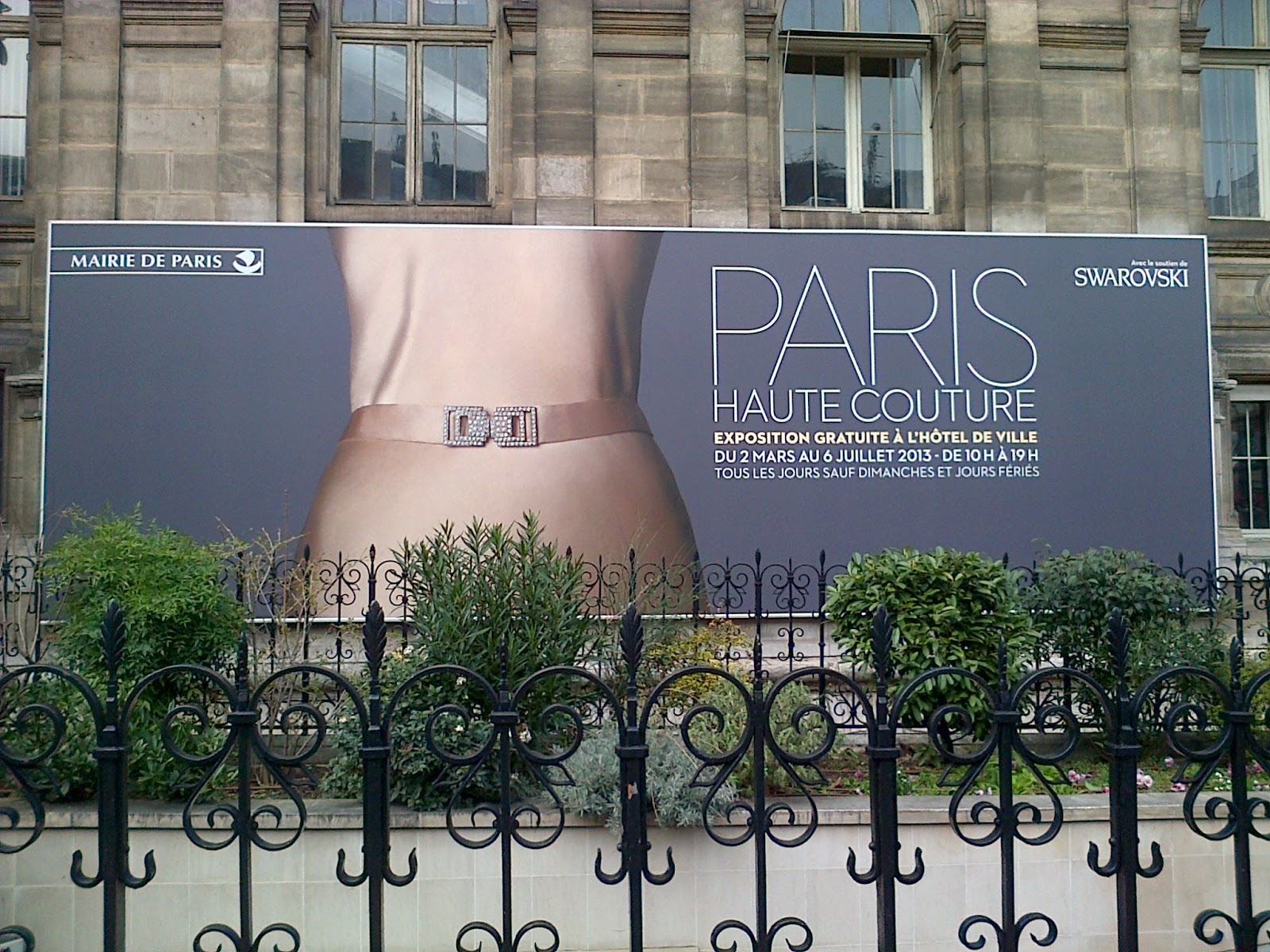
HAUTE COUTURE EXHIBITION SHOWS THE ART IN DESIGNING


Anyone remotely interested in design should visit “Paris Haute Couture”, the fascinating exhibition currently on at Paris’ Hotel de Ville (Town Hall).

Highlighting the artistic side of fashion design, the show features more than one hundred items that come from the leading fashion houses of the 20th century and shows haute couture in all its splendor.

From rough sketches to elaborate gowns, the exhibition also provides insight into the creative and technical processes in designing, and takes visitors into the designers’ imaginative world.

One can follow the path from idea to finished product, meeting the artisans along the way who don’t get to be in the spotlight, but without whom the garments, shoes and other articles couldn't be made.

“Behind the scenes, it takes countless hours of painstakingly precise work by thousands of skilled artisans to make such grand visions a reality,” says Paris Mayor Bertrand Delanoë, in an introduction to the exhibition.

“It is these unsung heroes, as well as the world-famous designers they serve, who have contributed to the development of an industry which has become such an integral part of our city’s identity,” he adds.

Paris hosts more than a hundred catwalk shows every year and is home to 20 haute couture fashion houses. The city also has 7,600 companies working in the fashion sector, and the exhibition evokes this lucrative industry.

But it is the sumptuous and innovative garments that are the real stars of the show. Retracing more than 150 years of fashion, they conjure up both the past and the future with their timelessness.

From gowns by Charles Frederic Worth, considered the father of haute couture, to creations by the eccentric Martin Margiela, the outfits express undeniable artistry. Visitors will want to step into dresses by Channel, Christian Dior, Balenciaga, Balmain and of course Yves Saint Laurent.

Some of the items - such as a burnt topaz double satin dress by John Galliano for Christian Dior, and black suede gloves with gold metal false nails by Elsa Schiaparelli – will make one smile with their daring and playfulness.

“Successive generations of creators have made haute couture an art form in its own right, as rich in meaning and sheer beauty as any of the classical disciplines,” says Delanoë, and visitors will most definitely be inclined to agree.

The items come from the collection of the Musée Galliera, a museum dedicated to fashion but closed for renovation until Autumn of this year.  Entry to the exhibition, which runs until July 6, is free to the public but visitors should be prepared for long lines especially on Saturday. J.M. DE CLERCQ and L. MCKENZIE


Saturday, March 9, 2013

LIE SANG BONG SINGS A MODERN SONG


Ending Paris Fashion week on a youthful, trendy note, Lie Sang Bong showcased geometric designs, gleaming leather, and ultra-modern platform shoes for a memorable show that contrasted with those of his peers.

The Korean designer, who is gaining a following among young fashionistas, stood out from many other designers in that his ready-to-wear collection actually seemed ready to wear. You could go into a store, buy it off the rack, and step out looking casually original.
 
Lie’s Fall/Winter 2013-2014 collection also had a slightly retro aspect as some of the cuts seemed to recall the Sixties.

The pants were straight-legged and ankle-baring, and the platforms looked like they had come off the dance floor from back in the day.

On most of his models, Lie mixed a single, cheeky colour with black or white, all merged into a minimalistic pattern. He finished the look off with some refined Asian touches, and traces of pelt.

Each model wore similar sneaker-platforms, white or black, but with streaks of painted-on colour to match the main piece or to bring it all together. 

The lack of high heels made the models seem confident and comfortable in the outfits, appealing to those who want to look fashionable yet feel relaxed.

The models’ faces had single silver stripes alongside the eyes, corresponding to the hair, shoes and outfit, for an overall unconventional feel.  - J.M. DE CLERCQ and L. MCKENZIE