Tuesday, August 12, 2014

VIENNA SHAKES OFF STAID IMAGE IN BOLD ARTISTIC FASHION

From coffee houses and sachertorte, to “hipness” and creativity. Yes, Vienna is shedding its formerly staid image, with the help of cutting-edge fashion and a flourishing contemporary art scene.

Design by Michel Mayer
(Photo MQVFW/ T. Lerch)
The Austrian capital has a noticeably different atmosphere from years past, when the grand, imposing buildings, sounds of music and traditional cafés seemed to push visitors back in time.

Now, local and international designers are contributing to a vibrant fashion scene, amidst the baroque architecture, and new art and exhibition spaces are adding a youthful buzz to this historic city.

From 10 - 14 September, the Museumsquartier in the 7th district will become a giant runway with the MQ VIENNA FASHION WEEK, as the city vies with other capitals such as Paris, Milan and London for the title of trendsetter.

German designer Michael Michalsky will present his latest collection on the opening night, after which the week will see more than 70 designers participating. Viennese stylist Michel (Michaela) Mayer will be among those representing Austria, while others hail from Portugal, Thailand, Russia, Romania and a host of different countries.

The organizers of MQ Vienna Fashion Week
Last year the Fashion Week drew some 10,000 visitors, and the organizers say they expect more this year for the sixth edition of the event, which is unusual in fashion circles because of its accessibility.

“Unlike other Fashion Weeks, it is possible for everyone to buy a ticket and attend the shows, to see the upcoming trends being presented on a runway,” the creative headz organizing team - Maria Oberfrank, Zigi Mueller-Matyas and Elvyra Geyer - told Tasshon.

“We also offer a designated shopping area, where guests can shop the current collection from the designers that present their coming collection.”

Fashion by Susanne Bisovsky
Photo: MQVFW / T. Lerch
They added that the MQ VIENNA FASHION WEEK “offers young designers a platform to present their latest ideas” and that it has sparked collaborations outside of the traditional Fashion Week.

Asked to describe the fashion scene in the city, the organizers had this to say: “Like Vienna the city, the contemporary fashion scene is a delicate balancing act, between the classic and the young avant-garde.

“There are a great many young new fashion designers, further enriching the scene each year. We have well-established designers like Susanne Bisovsky, Anelia Peschev and Manufaktur Herzblut, who put their own spin on what can be considered to be classic fashion. On the other hand, we have young designers like Ruins of Modernity, R! by Dominique Raffa and Mariella Morgana, who have a more avant-garde approach, but are still ultimately wearable fashion.”

The growing group of young, enthusiastic stylists have already carved out a niche in the capital. In several areas of the city, particularly around Schleifmuhlgasse and Kettenbruckengasse, visitors are spoilt for choice by the array of boutiques offering modish outfits.

Dress by Susana Bettencourt,
a designer taking part
in MQ Vienna Fashion Week
Norbert Kettner, managing director of the Vienna Tourist Board, asserts that the city’s “avant-garde fashion scene has no end of collections” for visitors to discover.

The same could be said of the art field, as a thriving contemporary landscape has developed over the past years, complementing Vienna’s long-established museums devoted to the works of Klimt, Schiele and other icons.

The Museumsquartier (Museums Quarter or MQ), the site of the fashion week, is at the heart of the cultural resurgence. Inaugurated in 2001, it has expanded to become one of the ten largest cultural areas in the world, comprising museums, theatres, recreation facilities and restaurants.

This one-stop "culture feast" complex also houses mumok, the museum of modern and contemporary art, and here visitors will find artwork that contrasts hugely with Vienna’s erstwhile old-world air.

The modern interior of mumok (Photo: Tasshon)
Mumok is made for art fans who adore conceptual fare, and the wide spaces of the ultra-modern interior will appeal to such visitors. But for an in-depth look at an earlier “modernism”, one can head over to the neighbouring Leopold Museum, which boasts of having the world’s largest collection of works by Egon Schiele, along with a wide selection of paintings by Gustav Klimt.

The Leopold is the most visited museum at the Museumsquartier and with good reason, as it gives viewers a remarkable insight into the life and work of Schiele, who died in 1918 (at the age of 28) but who seems timeless.

In fact, Schiele’s paintings wouldn’t look out of place in the many current alternative art spaces in Vienna. These include das weisse haus, which changes locations according to its exhibitions, and the 21er Haus, housed in the former Austrian pavilion from the 1958 World’s Fair.

Known for its art shows and performances, the 21er Haus has billed itself as a “meeting point for fans of contemporary art” since its opening in 2011.

The Belvedere (Photo: Tasshon)
But contemporary art can also be seen in the traditional museums, which is part of what makes Vienna unique, according to Helena Hartlauer, the daughter of an artist and a member of the media relations team at the tourist board. “You don’t find this mix in other cities,” she told Tasshon.

At the Belvedere, the majestic former summer residence of Prince Eugene de Savoy, Klimt’s famous golden masterpieces such as “The Kiss” are on display. But in the same building, visitors can also view contemporary works.

This is equally the case at the impressive Kunthistorisches Museum, whose collections include famous paintings by the Flemish master Brueghel as well as Greek and Roman sculptures. The museum makes space for contemporary art in its programme too.

Works by Alex Katz  (Photo: Tasshon)
At the renowned Albertina, meanwhile, the range is from Leonardo da Vinci to Andy Warhol, with Manet, Cezanne, Klimt and Schiele also in the mix. Starting in September, the Albertina will show the “cosmic magic” of Catalan artist Joan Miró in a show titled “From Earth to Sky”. And until the 28th of September, visitors can catch the “cool aesthetics” of the American artist Alex Katz.

New York-born Katz, now 87 years old, donated 60 works to the museum, which has displayed them in an appealing manner, highlighting the artist’s contemporary style through sketches to portrait drawing.

As if all this wasn’t enough, there is art in the metro, art at hotels such as the Sofitel and the newly opened and very luxurious Vienna Park Hyatt, and art at diners such as Schaltwerk in the 6th district - a fusion of art gallery, bar and café

Cafe Central (Photo: Tasshon)
In addition, Vienna will host two major events this fall: the Vienna International Art Fair (aka Vienna Fair) in October and Vienna Art Week 2014 in November. 

Yes, this is the way to change one’s image, and when visitors have had their fill of art, they can still head to Café Central for a coffee and a slice of rich chocolate cake, never mind the rude waiters. - L. McKenzie

Monday, July 7, 2014

ILJA SERVES UP COOLNESS, CLASS AT PARIS COUTURE WEEK


Glasses of chilled, bubbly water welcomed fashion lovers in the front courtyard of an ambassadorial residence in Paris Monday, as Dutch designer Ilya got ready to present her couture show.

When spectators entered a stunning hall of parquet floors and taspestry-covered walls, they were greeted by long-stemmed white roses on each seat, giving everyone a “voorgerecht” - a little taste of what was to come.

Coolness and class were thus the promised flavours, and the show followed through on those first hints.

Ilya’s Fall-Winter 2014-2015 couture collection relied on a refined black-and-white color scheme, with salient splashes of corals and blues. Simple cuts and understated shades contrasted with intricate sculptural and geometric shapes.

Although most of the pieces highlighted femininity, suit-type ensembles did not look out of place, as they integrated some fashionable twists such as plunging v-necks and transparent fabric.

Outfits made from luminous material also bedazzled the eye, despite the overall discreet element of the show.  This was an altogether very wearable couture collection, evocative of Ilya’s journey to her current position as a designer who eschews needless flamboyance.

Born Ilja Visser, she started her career in fashion design at ArtEZ School of arts in Arnhem, the Netherlands. She went on to intern with Donna Karan (founder of DKNY), and Maria Cornejo, whose clientele includes American first-lady Michelle Obama and Scottish actress Tilda Swinton, queen of the ice-cool look.

Ilya founded her own company in 2005 and was the first designer to receive the prestigious cultuur mode stipendium award from the Prince Bernhard Cultural Foundation in 2011. 

The current collection suggests she might be in for several more prizes. - J.M. De  Clercq

Wednesday, June 11, 2014

FROM RABANNE TO AZERBAIJAN, TILMANN GRAWE DESIGNS ON

An early creation by Tilmann Grawe

His name might not be on everyone’s lips, but his innovative designs are on several celebrity heads and bodies. Tilmann Grawe is a German-born Parisian designer who is attracting new fans with his inventive couture and accessories as he celebrates 25 years in the fashion business, including seven with Paco Rabanne.

Tilmann Grawe
 (photo: V. Verdiyev)
Stars such as American singer Lady Gaga and Indian actress Aishwaryra Rai have worn his designs, but this is not something that Grawe dwells upon. As a designer, he’s focused on his art and also involved in social causes.

He has been a long-time participant in UNICEF's Frimousses de Créateurs (Designers’ Dolls) venture, for instance, contributing to a project that raises funds through the selling of designer dolls in order to provide vaccines for the children of Darfur in Sudan.

"This project is very important to me,” Grawe says. “The money raised helps to save children’s lives and that’s the reason we’re all involved.”

This past year has seen Grawe doing magazine shoots in Azerbaijan (a country not without certain problems), and he’s getting ready to launch a project that he's keeping private for now. But it’s also been a time of reflection on his quarter-century as a designer, working with icons such as Rabanne and others.

Grawe began presenting his own clothing and accessory collections in 1989. He says he has always known that he wanted to be a designer, as he grew up watching his grandfather work as a tailor. But when he eventually did a sewing workshop as a teenager, he realized that he “liked fashion, but not for men”.

Lady Gaga in a Grawe design
“I found that tailoring for men was annoying because the colours were always dark blue, grey or black,” he told Tasshon. “Light blue was the most exciting you could get. You couldn’t let your imagine go wild which is what I wanted to do.”

He pursued an apprenticeship in Frankfurt and, after two years of study in Germany, he became conscious of the fact that he needed to leave his homeland to pursue his dreams.

“Frankfurt is a banker’s city, and while there is money there, it doesn’t mean that’s the best place for fashion,” he says. So he moved to Paris with his parents' financial assistance, and attended classes at the prestigious Chambre Syndicale de la Couture Parisienne in the French capital.

At the time, he was very “oriented towards haute couture,” he recalls. “I thought I would just do one dress a year, handmade from A to Z.” But business and economics would “intervene” to change his goals. While he was completing his studies, he was hired by Louis Féraud Haute Couture, and learned the first tough lessons of the industry.

“The attitude then was that you work but you don’t ask for money,” Grawe says. “That was just how it was.” He spent a year at Louis Féraud and saw one of his sketches turned into an haute-couture dress, which the design house gave to him when he left to embark on full-time designing rather than toiling in the workshop.

Grawe's "Queen of Mars" creation
A few years later, in 1992, Grawe got his big break when a colleague recommended that he contact legendary Spanish-born designer Paco Rabanne and he landed a personal interview with the couturier after sending him a letter. Rabanne, whose outlandish designs had gained him a huge following in Paris, was interested in Grawe’s experiments with metal, crystals and other materials.

“At this time to be honest, I didn’t want to go back into a fashion house because I didn’t like the aggressive atmosphere,” Grawe says. “But working with Paco Rabanne was wonderful because he gave me so much freedom. For every collection, I had my own part, doing showpieces.

“Paco Rabanne was never afraid of being different,” Grawe says of the 80-year-old designer who incidentally was erroneously reported to have died this month. “Most people are afraid of what their neighbours will say, and when you start thinking like that, you’re cutting your genius down because you don’t take risks. He always did things that made him stand out.”

Grawe and friends at a costume party.
After a very fruitful seven-year collaboration, Grawe stepped out on his own when Rabanne’s haute-couture line ended. In 2000 Grawe presented his first luxury ready-to-wear collection at the landmark Bristol Hotel in Paris, and the show was hailed as a resounding success. Among those drawn to select a dress was actress Rai, who chose a creation that combined pink chiffon, crystals and Plexiglas that she wore to the Cannes Film Festival.

Since then, Grawe has travelled the world, showing his collections that range from headgear to footwear, and expanding his clientele. One experience that remains close to his heart is his association with Eunice Johnson, co-founder of the Johnson Publishing Company and of the renowned magazine Ebony. Johnson also produced and directed Ebony Fashion Fair, where she raised funds for charities, and Grawe was among her favourite designers.

Grawe with one of his UNICEF designer dolls.
“She was an amazing person,” Grawe says of Johnson, who died in 2010. The entrepreneur worked to promote models of African origin, and Rabanne and Grawe have always included such models in their shows, unlike some other stylists.

“Human beauty comes in diverse forms and this has always been my vision,” Grawe says. “I don't understand designers who use only one type of models.

Regarding his participation in social initiatives, such as UNICEF's designer-doll programme, Grawe sees this as being part of his future over the next 25 years.

“Whether you’re a designer or a doctor, you always have to give something back,” he told Tasshon. 


A midnight-blue gown by Grawe

Saturday, May 10, 2014

STOCKHOLM SHOWS ITS TRUE COLOURS IN SPRINGTIME

Stockholm's Old Town on a spring day

Sunshine makes a huge difference to cities such as Stockholm, where the dark winter days can fill one with an overwhelming desire to flee south.

Once the light comes out, the Swedish capital comes into its own, showing off its waterways and striking pastel-hued buildings. A warning for those who can't even draw a straight line: spring in Stockholm might push you to sign up for a course in oil-pastel painting.

Cityscape at sunset
The city pulses with restored energy as well, and travellers can find much to keep them occupied.

One doesn’t need to spend too much time searching for a place to stay because accommodation ranges from bright, clean youth hostels to fancy old-world establishments

In between are lodgings such as the Clarion Hotel Sign, a new architectural landmark designed by Swedish architect Gert Wingårdh. The building, dominated by granite and glass (imagine a modern Tower of Pisa), leans over the historic Norra Bantoget, a square near the Central Station. Its convenient location makes it a good base for exploring the city, as a short stroll puts one in the heart of things.

The Drottninggaten shopping street, a pedestrian thoroughfare with all the well-known Swedish brands, is less than five minutes away, for instance. The street is home to what seems like the largest H&M store in the world, but tourists shouldn’t expect the prices to be any cheaper than in their home city. A common complaint about Sweden is that everything is “so expensive”.

Royal guards, on their way to duty
Drottninggaten leads to the imposing Parliament building, the Riksdagshuset, and to the Royal Palace, one of the largest palaces in Europe. This is a huge block of a building that couldn’t by any stretch of the imagination be called beautiful, but the royal guards make up for the lack of splendour.

With their horses, bugles and colourful uniforms, they put on a memorable spectacle at the changing-of-the-guard ceremony in the palace’s courtyard. It's wise to try to get a good position early because the warm weather can mean big crowds jostling to see the show. 

Behind the royal abode, one can explore the narrow, cobblestoned streets of Gamla stan, the Old Town. This medieval area used to be called “The Town Between the Bridges” as it lies on an island. In spring, the soft-tinted buildings take on a special light, and it’s a pleasure to stop for coffee on the Stortoget, a square where the colours of the old merchant houses flow from rose to ochre.

Houses on the Stortoget
Besides the Royal Palace, Gamla stan is home to several major attractions including the Nobel Museum, the Stockholm Cathedral, Riddarholm church, and the Riddarhuset or House of Nobility – all worth seeing.

From Gamla stan, a walk along the water shows a different side of Stockholm. Water, in fact, is another reason that the city shimmers in spring, with reflected splashes of light all around as one crosses bridges such as the Centralbron or rides a bike along the Strandvägen. Sight-seeing boats also criss-cross the bay and offer some spectacular views of Stockholm’s diverse islands.

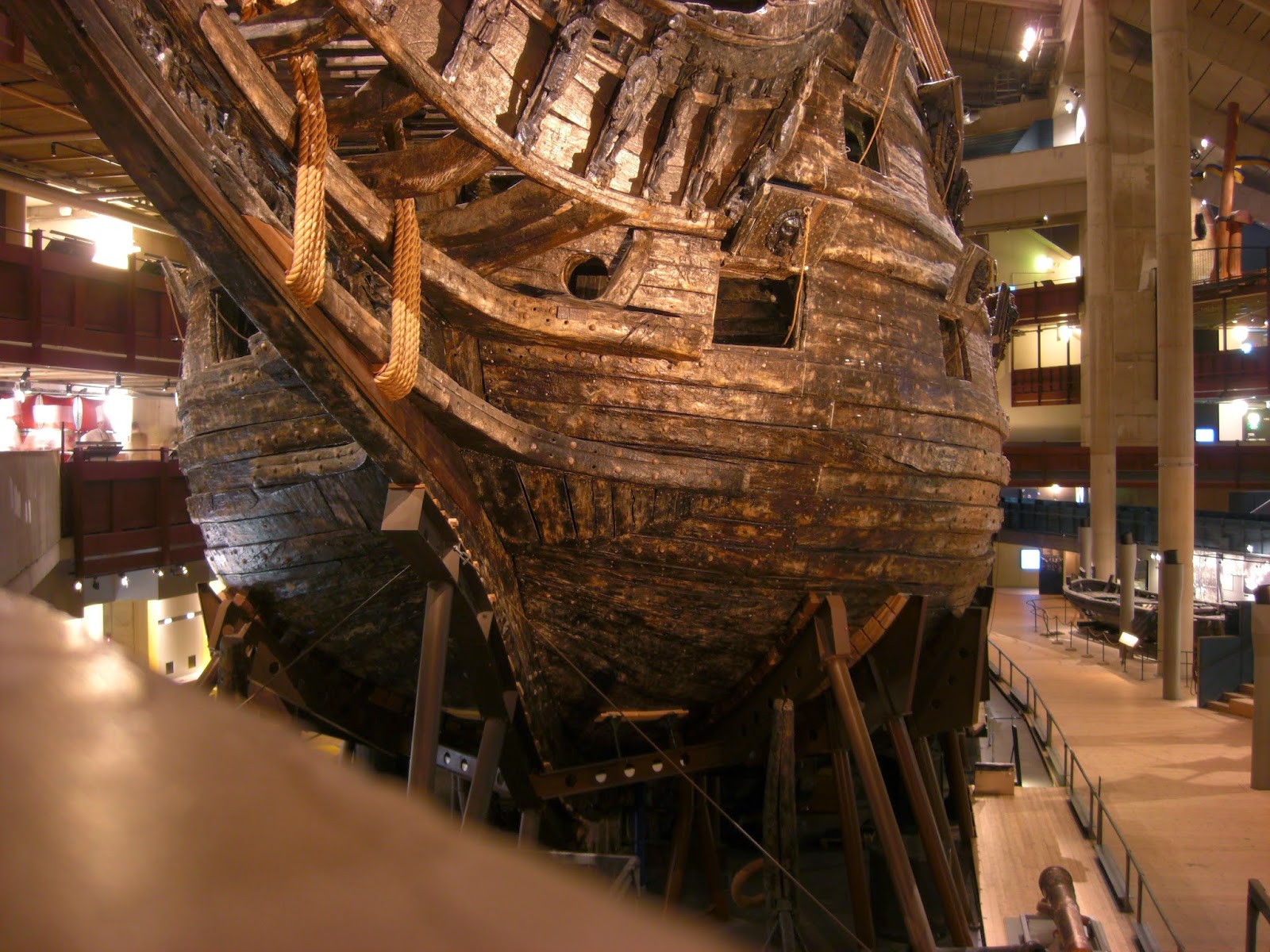
Tourists can hop off the boat on Djurgården and visit an array of museums, galleries or even an amusement park. "Abba: The Museum", devoted to Sweden's iconic pop group, is here, and another must-see is the Vasa Museum, which houses the world’s best-preserved 17th-century warship.

A section of the Vasa warship
The massive 64-gun Vasa keeled over on its maiden voyage in 1628, and sank in the middle of Stockholm harbour after sailing a mere 1,300 metres. It was salvaged in 1961 with - so we’ve been told - the skeletons of its crew still on board. 

After a day of seeing sights such as this remarkable ship, one can dine al fresco in Gamla stan at any of several good restaurants. 

Another option is to head back to the Clarion Hotel Sign, where the renowned Ethiopian-born Swedish chef Marcus Samuelsson has set up his American Table Brasserie and Bar. Here, Swedish ingredients are used for new American cuisine, making for an unusual mixture in this Nordic town. - Text and photos by Tasshon

A cookbook by Swedish chef Marcus Samuelsson.
His restaurant "American Table" can be found
at the Clarion Hotel Sign in Stockholm.

Wednesday, May 7, 2014

PARIS RESTAURANT REVIEW: LILY WANG HITS THE RIGHT NOTES

The lantern-lit interior of Lily Wang
We had almost given up hope of finding an outstanding French-Asian restaurant in Paris, when we came across “Lily Wang” -  a name that evokes a mythical character.

This restaurant in the city's seventh arrondissement, near Les Invalides, has a classy interior, softly playing jazz music and, more important, memorable dishes at affordable prices. A fish main course costs about 25 euros.

There is no "Ms. Wang". Manager Patricia Finot said the name is an invention, as the idea was  to create an image of glamour in the minds of potential clients.

With a Cambodian chef, the restaurant offers fusion cuisine - a mix of East and West that mostly impresses with its fineness. One can have dim sum as a starter before moving to “larmes de tigre” (grilled beef), marinated in an Armagnac-based sauce.

The three-year-old eatery attracts a very Parisian clientele, with some diners coming from the world of cinema and fashion. Here, one can have a private conversation without fear of being overheard as there is comfortable space between the tables. The voice of Nina Simone, or another jazz legend, also warmly cloaks the chatter.

Finot, a trained legal expert, has taken the reins from her farther who has been a restaurateur for 40 years, starting in Saint Tropez. She is usually on hand to greet clients, while her staff of elegant servers stay attentive throughout the meal.

Our favorite dish was the bream baked in banana leaf. But a must-try is the chocolate "spring rolls" - a dessert of warm chocolate wrapped in pastry and served with a banana sauce. Having said all this, our additional advice is to dine in the evening, as the lunchtime menu can vary in quality.  - Tasshon.

Lily Wang: 40, avenue Duquesne, 75007 Paris. Telephone: (+33) 01 53 86 09 09.

Saturday, April 19, 2014

MARSEILLE BRIGHTENS UP WITH ART, NATURE WALKS AND SOAP

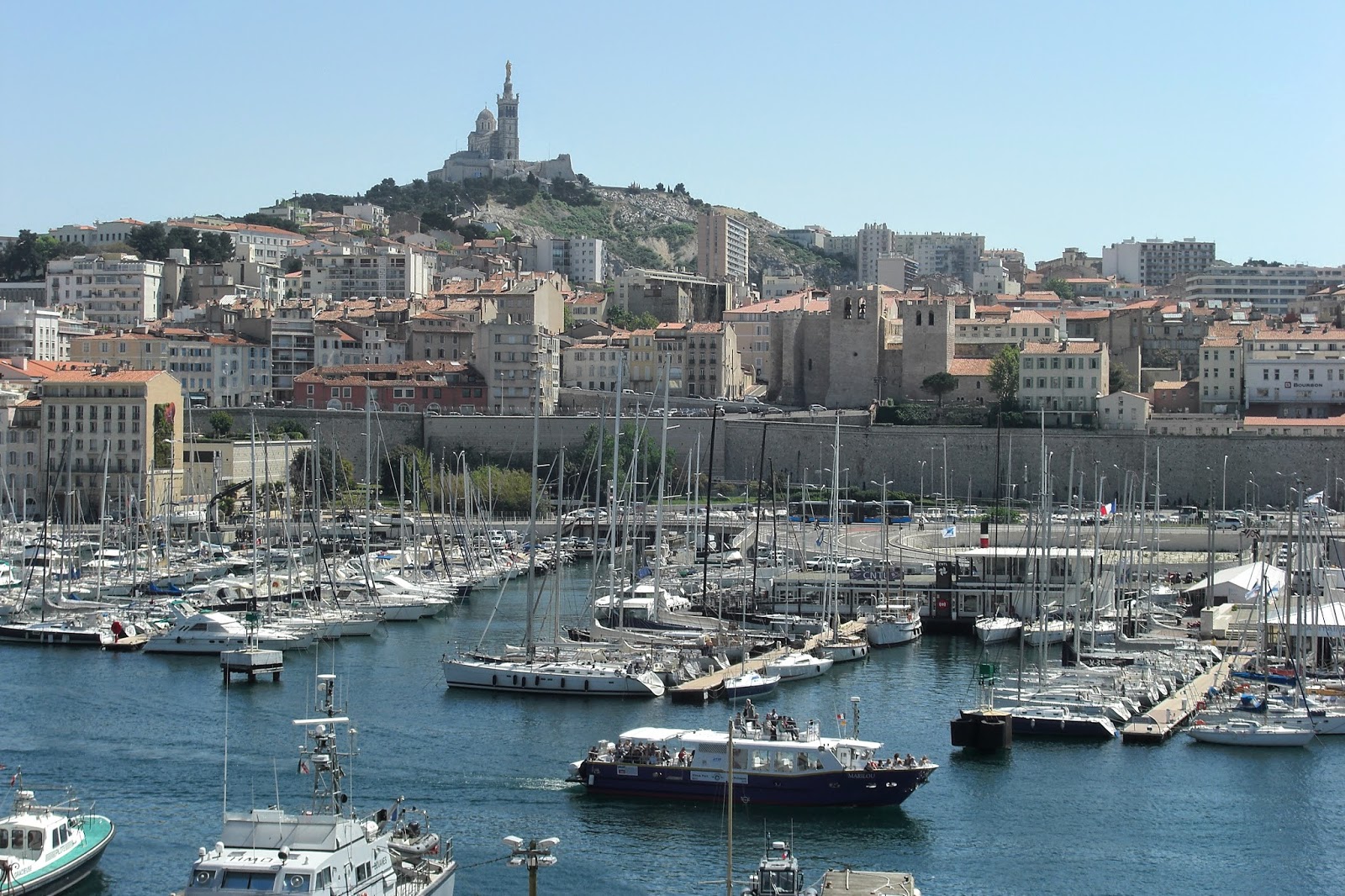
The Vieux Port (Old Port) of Marseilles
“Follow your nose,” said the lady, when asked for directions to the Savonnerie de la Licorne (soap factory and shop). “You will smell it before you see it.” 

The delicate scents of lavender, rose, honey and lily of the valley led to a shop whose facade was covered in graffiti. Inside, a variety of soaps were artfully displayed in a small space, while in the busy atelier behind the shop, workers operated traditional machines that dated back 100 years or more.

The Savonnerie, in the once gritty but now increasingly fashionable Cours Julien neighbourhood of Marseille, reflects the city’s past as a producer of fine soaps. But as the shop currently welcomes tourists from all over the world, and as its "graffiti-embellished" location turns trendy, the Savonnerie can be seen as a sign of how Marseille is changing.

Soap in the city.
This bustling southern French city has embarked on a wide-ranging restoration and beautification programme, and is transforming itself into a popular destination for art-lovers, nature enthusiasts, gourmands and shoppers. Thousands of tourists have in fact discovered Marseille since it was designated the European Capital of Culture in 2013.

“That label was very important for us,” says Marion Fabre, the press attaché for the city’s tourism office. “Because of this, we were able to get support from the European Union to move ahead with many projects.”

The projects included the opening of four impressive new museums and the renovation of several others, which helped to attract a record 5.5 million tourists in 2013, according to officials.

MuCEM
In addition, despite the city’s reputation for gang-related violence and other ills, some 1.15 million cruise-ship passengers passed through Marseille last year, up from 19,000 in 1995.

“People are realizing that Marseille is a good place to do everything,” says Fabre. And the city really does have much to tempt visitors. The most notable addition to Marseille’s cultural offerings is MuCEM, the Musée des Civilisations d'Europe et Méditerranée (European and Mediterranean Civilisations Museum) that opened last June.

Housed in an architecturally stunning building that’s linked to the city’s restored Saint Jean Fort by an aerial walkway, MuCEM is the first museum in the world entirely devoted to Mediterranean culture. The aim is to enable visitors to “discover and better understand the societies in which we live”, say the curators.

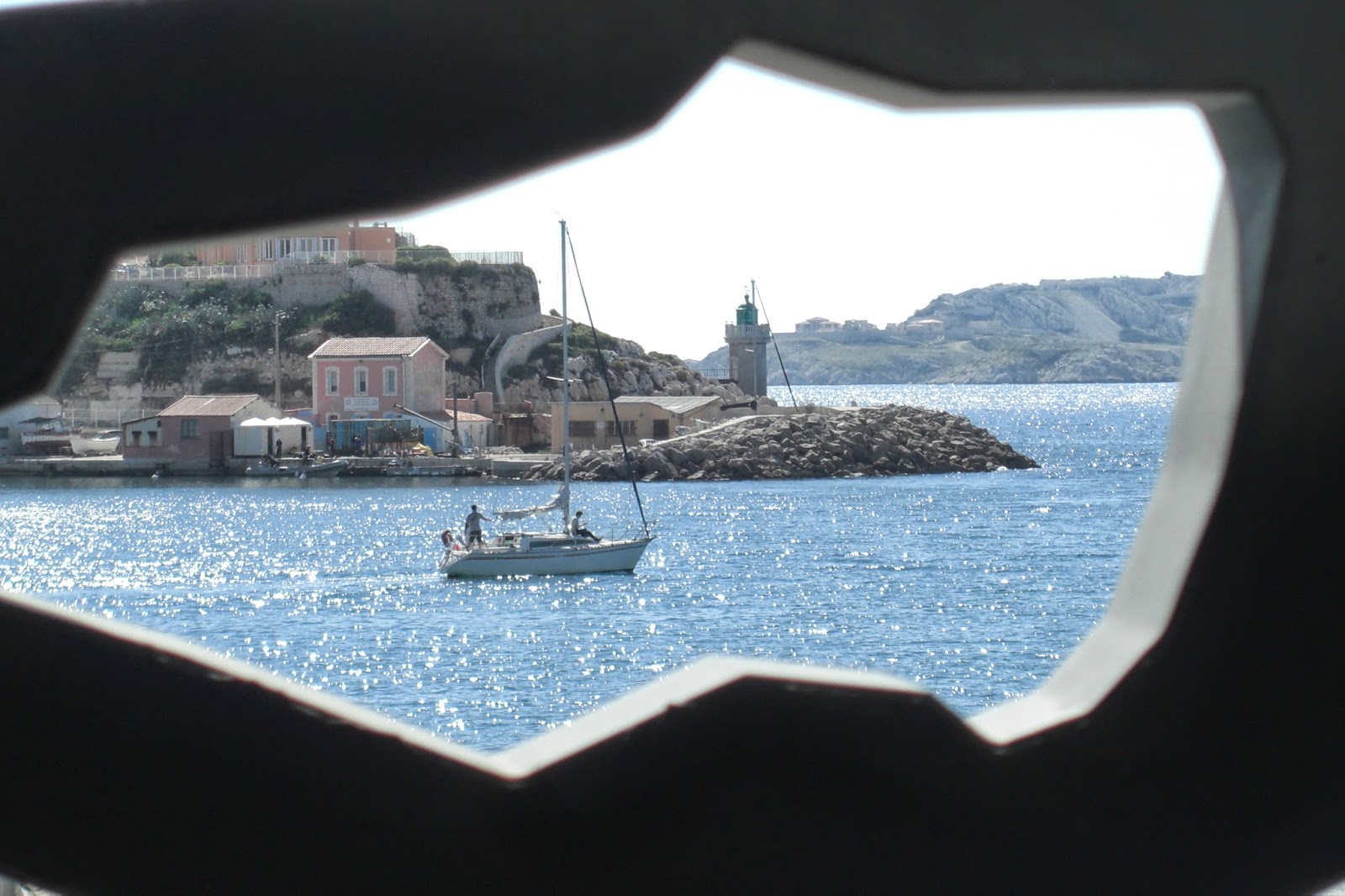
One of the views from MuCEM.
Designed by Algerian-born architect Rudy Ricciotti, the building capitalizes on its location above Marseille’s famous Vieux Port, with museum-goers able to enjoy spectacular views of the sea and islands in the distance. The exhibits might not be much to write home about, as you can see similar items in many other museums, but the building itself will stay in one’s memory.

On the other side of the Vieux Port, both the building and displays are impressive at the Musée d'Histoire de Marseille (Marseille History Museum), which reopened in 2013 with a modern new design, 30 years after it was created. The museum is built around an archaeological site where artefacts of the city’s history were discovered, testament to Marseille’s ancient Greek past.

Here, thematically organized objects, films, and interactive video installations take visitors on a journey through 2,600 years of history, showing the city’s timeless links with the Mediterranean Sea. The remains of huge boats, painstakingly reassembled, are among the central items of the collection.

The remains of an ancient boat.
“Thanks to scientific research and documentation, all these collections recount the lives of the men and women, famous or unknown, who have been involved in the making of the city’s history,” says Laurent Vedrine, the head curator.

The Musée d'Histoire is one of 20 museums now present in Marseille, with some exhibiting modern or ancient art. The Vieille Charité, a former almshouse that now houses several museums and a cultural centre, is currently hosting an intriguing show titled “Visages” (Faces), with paintings by 90 artists including Picasso, Magritte and Warhol, that runs until June 22.

If one gets tired of looking at exhibitions, however, one can opt for gazing at nature’s own art – in the renowned Calanques National Park, just outside the city.

Given protected status just two years ago, in May 2012, the Calanques form Europe’s largest National Park and is the first on the continent to include a land, marine and suburban area, being the gateway to Marseille with the city’s nearly one million inhabitants.

Part of the Calanques National Park.
It took years of discussion and action for the 5000-hectare locale to achieve its status, but now area residents and visitors can feel good knowing that the park will be preserved for future generations who will also be able to enjoy the breath-taking landscape and biodiversity.

Birds, lizards and butterflies are some of the creatures  that one comes across while hiking through the limestone “wilderness”, and when one treks down to the sea, one can spot turtles or, if lucky, unusual fish such as the Corb.

Marseille’s old urban areas are also being preserved and upgraded. One of the biggest symbols of this is the huge mirror-ceiling by English architect Norman Foster covering the pedestrian plaza at the top of the Vieux Port.

A vendor sells Marseille soap at the Vieux Port.
Around the Port, vendors in traditional costumes sell Marseille’s most famous product - yes, the soap. And back at the Cours Julien district, tourists can take a tour to see how it’s made.

“We mix vegetable oil with soda and add different ingredients to make unique soaps that feel great on your skin,” says the director of the Savonnerie de la Licorne, Serge Bruna, as he leads the way through the shop and factory. 

As workers cut and stamp the sweet-smelling products, Bruna explains to visitors that the Marseille soap industry was created in the 16th century and that by 1786, there were 48 soap factories employing 600 workers, with an annual production of 76,000 tons.

The soap is packed and ready to go.
Manufacturing methods evolved during the 1800s, producing sought-after soaps made with olive oil or palm oil. Nowadays, few active soap factories remain in Marseille, but the city remains linked with the product, and soaps can be bought in several specialty shops in the touristic areas. Bruna’s artisanal products are aimed at the luxury market and sold in European countries, China, Japan, the United States, as well as in Marseilles itself.

Indeed, as the Mediterranean city tries to scrub its image, it seems as if the smell of vanilla-scented soap is everywhere. - L. McKenzie & J.M. De Clercq


From grafiitti to gentrification ...
And natural beauty.

Tuesday, April 1, 2014

‘PABLO’ LOOKS AT LOVE, LOSS AND ART, UP IN MONTMARTRE

"Fernand and Pablo on the Stairs" © C. Oubrerie, J. Birmant, Dargaud

It’s a comic book that Pablo Picasso himself might have read with glee. Or perhaps not. The Pablo series tells the story of the Spanish artist in France, his tumultuous relationships and his controversial paintings, and it does so with its own striking artwork.

The cover of  "Pablo", Vol. 4
© C. Oubrerie, J. Birmant, Dargaud
Created by writer Julie Birmant and illustrator Clément Oubrerie, the four-volume series has gained a following among those who like both biography and bandes dessinées (comics), and the latest book is now the focus of an exhibition at the Montmartre Museum, high in the “hills” of Paris where Picasso and many other artists lived and worked.

“From the very first volume, I thought this was a wonderful story with fantastic drawings,” says Sophie Egly, the director of the museum. “We hope this exposition will attract new visitors to the museum, to discover the history of Montmartre and the legendary artists who lived here.”

The exhibition, titled Picasso à Montmartre: La BD de Julie Birmant et Clément Oubrerie, juxtaposes large-format illustrations from the comic books with photographs, sketches and paintings from the early 20th century - the period when Montmartre was a veritable artist’s village, rife with love affairs, intense friendships and venomous rivalries.

One can compare Pablo’s portrayals with the museum’s collection of historical documents and see how much research the authors must have carried out as they tried to recreate a bygone era. They began working on the series without knowing much except for the “names that shone with a familiar kind of light”, names that had infused their childhood, says Birmant.

“I grew up in Montmartre, in a family that was aware of cubism,” she recalls. “I loved Picasso’s primitive paintings which were like childhood posters for me.”

The Montmartre Museum. Photo: G. Lachaud
Meanwhile, her co-creator Oubrerie grew up in a house decorated with prints signed by Max Jacob, the French poet and artist who was one of the first friends Picasso made in Paris. Jacob had been a friend of Oubrerie’s own grandfather between the two world wars.

Pablo presents engaging stories of the characters that shaped this epoch, and visitors to the Montmartre Museum, housed in a rustic 17th-century building, will find themselves imbibing art history without too much effort.

The comic-book series begins with the Picasso-Jacob friendship, and it moves on, in volumes two and three, to Picasso’s relationship with writer and critic Guillaume Apollinaire and with fellow painter Henri Matisse.

But the whole series, and especially the final volume, is really about Picasso’s stormy liaison with Fernande Olivier, an “impossible woman” who was central to the creation of the violent, “revolutionary” artwork Les Demoiselles d'Avignon (The Young Ladies of Avignon).
Piscasso and Fernande in his studio
© C. Oubrerie, J. Birmant, Dargaud

Picasso did this painting in Paris in 1907, as a means to rid himself of the passion he felt for Fernande, according to some accounts. The comic-book authors make Fernande central to their story, conveying the idea that she was key to the artist that Picasso became, and the museum also picks up on this theme.

“In my research, I quickly realized that Fernande played a leading role in the growth of cubism,” says Birmant. “Without her, there would not have been the Demoiselles d’Avignon, and yet the public knows little about this woman. It was important to give her back her place in art history.”

Birmant came across Fernande’s autobiography Souvenirs intimes (Private Memories) by chance in 2010 as she was visiting a local library, and the book touched her with its “cultivated yet savage” tone.

“I wanted to understand what it was that, after 40 years, made her remember her time with Picasso as the most beautiful thing that had happened to her,” Birmant says.

She thought about turning the book into a screenplay but finalled settled on doing a bande dessinée - a genre popular in France. Now, after almost 2,000 drawings and 300 pages, art aficionados can follow this story both in the comic book and through the Montmartre Museum’s display.

Sacré Coeur © Tasshon
The exhibition begins with the introduction of the two “protagonists”, with panels showing them in a passionate embrace. Then original paintings and drawings of Montmartre, by famous 19th- and 20th-century artists, form a counterpoint to the comic-book artwork.

Visitors equally get to examine artistic representations of Montmartre’s famous sites, such as the Sacré Coeur Basilica, which lies just up the road from the museum, and the Lapin Argile, a rose-coloured cabaret house that both Picasso and artist Maurice Utrillo depicted in paintings.

Pablo tells the tale of the Montmartre of the 1900s, though a love story that’s both intense and tragic,” says museum directory Egly. “Could the Montmartre of yesterday be understood without the creative lens of today? That’s a good question.”

And would Picasso and Fernande have approved? That’s another good question. - L. McKenzie & J.M. De Clercq

The exhibition runs until August 31 at the Musée de Montmartre, 12 rue Cortot, 75018 Paris. The comic book is published by Dargaud.